As your business grows, your warehouse should support that growth, not slow it down. Yet many operations continue to rely on storage methods that were put in place years ago, even as inventory levels, order volumes, and customer expectations have changed dramatically.
The problem is that warehouse storage inefficiencies do not always appear overnight. They often show up gradually through crowded aisles, damaged inventory, slower picking times, and increasing safety concerns. Before long, these small issues begin to impact productivity, profitability, and customer satisfaction.
So how do you know when it’s time to invest in warehouse racking and storage solutions?
Here are seven common signs that your facility may be ready for an upgrade.
What Are Warehouse Racking and Storage Solutions?
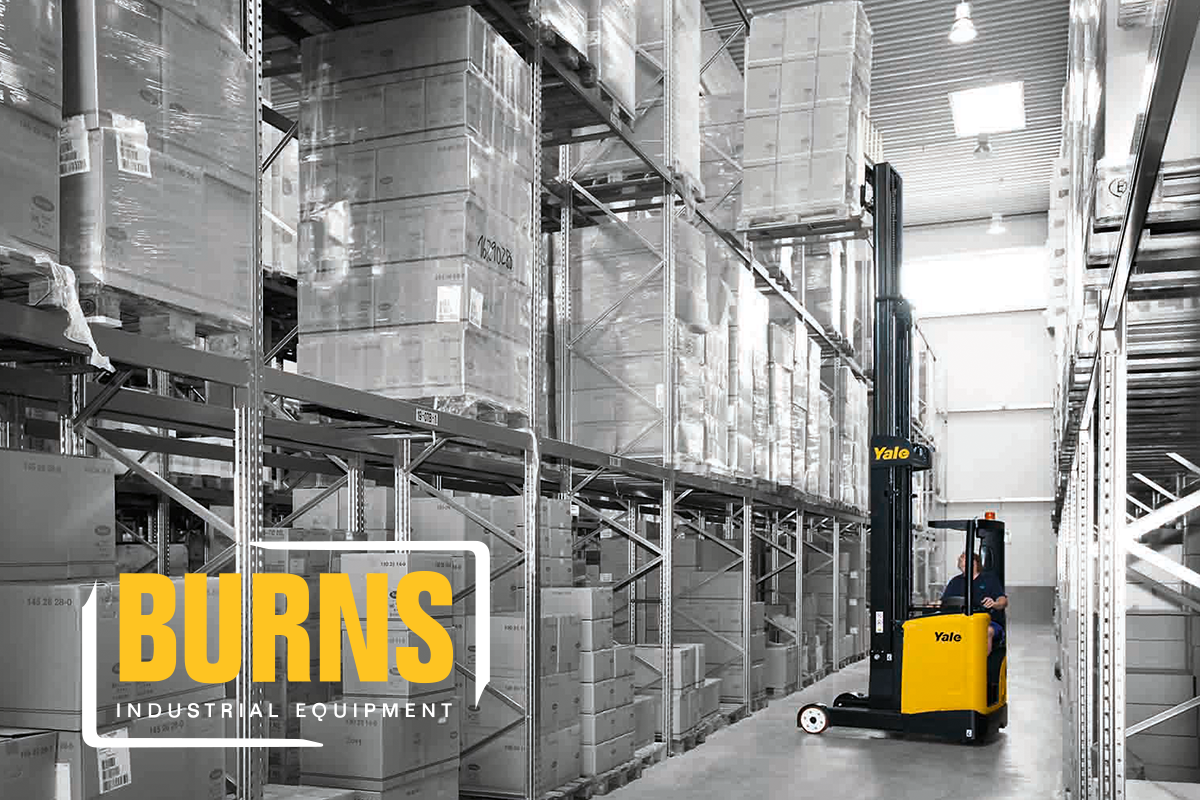
Warehouse racking and storage solutions are systems designed to maximize storage capacity, improve organization, and increase operational efficiency. Instead of storing products directly on the floor, these systems leverage vertical space and structured layouts to create a safer and more productive warehouse environment.
Common warehouse storage systems include:
- Selective pallet racking
- Drive-in and drive-through racking
- Push-back racking
- Cantilever racking
- Carton flow systems
- Industrial shelving systems
- Mezzanine storage solutions
The right solution depends on factors such as inventory type, warehouse dimensions, throughput requirements, and available material handling equipment.
At Burns Industrial Equipment, we help businesses identify storage opportunities that improve space utilization while supporting long-term operational goals.
7 Signs Your Warehouse Needs Racking and Storage Solutions
1. Inventory Is Taking Over Valuable Floor Space
One of the clearest indicators that your warehouse needs a better storage system is when products begin occupying valuable floor space.
If pallets are routinely stored in staging areas, along aisles, or in locations not originally intended for storage, your facility may be running out of usable space. While it may seem like an easy short-term solution, floor stacking often creates operational inefficiencies and limits accessibility.
Proper warehouse racking systems allow businesses to utilize vertical space rather than expanding horizontally. By storing inventory upward instead of outward, many operations can significantly increase storage capacity within their existing footprint.
If you’re constantly moving products around just to make room for incoming inventory, it’s likely time to explore a more strategic storage solution.
2. Employees Spend Too Much Time Searching for Products
Warehouses operate most efficiently when inventory is organized and easily accessible.
When employees spend valuable time locating products, checking multiple storage areas, or navigating cluttered spaces, productivity suffers. Even small delays can add up across hundreds or thousands of picks per week.
Common warning signs include:
- Frequent inventory searches
- Picking errors
- Delayed order fulfillment
- Inconsistent inventory placement
Structured racking systems create designated storage locations and improve visibility throughout the warehouse. This helps employees find products faster, improve accuracy, and complete tasks more efficiently.
The result is smoother workflows and better overall warehouse performance.
3. Your Warehouse Always Feels Crowded
A crowded warehouse doesn’t necessarily mean your facility is too small.
In many cases, the issue stems from inefficient use of available space.
When aisles become congested and forklift operators struggle to maneuver safely, operations become slower and more hazardous. Traffic bottlenecks can impact everything from receiving and put away to order picking and shipping.
Signs of excessive congestion include:
- Forklift traffic jams
- Limited staging space
- Blocked inventory locations
- Difficulty accessing pallets
Warehouse racking systems help create designated storage areas while improving traffic flow throughout the facility. Organized layouts allow material handling equipment and personnel to move more efficiently and safely.
4. Product Damage Is Becoming More Common
Damaged inventory is more than a storage problem. It’s a profitability problem.
Products stacked improperly or stored in overcrowded conditions are more vulnerable to crushing, tipping, and accidental impacts. These incidents can lead to product loss, customer dissatisfaction, and unnecessary replacement costs.
You may need improved storage solutions if you’re experiencing:
- Crushed packaging
- Damaged pallets
- Increased write-offs
- Frequent inventory adjustments
Racking systems provide secure, designated storage positions that help protect inventory from unnecessary handling and damage.
Reducing product loss not only improves profitability but also enhances customer satisfaction and inventory accuracy.
5. Safety Concerns Are Increasing
Warehouse safety should always be a top priority.
When inventory begins accumulating in aisles, emergency exits become partially blocked, or products are stacked unsafely, the risk of workplace incidents increases significantly.
Common safety concerns include:
- Obstructed walkways
- Limited forklift visibility
- Unstable pallet stacks
- Restricted emergency access
A professionally designed storage system promotes safer warehouse operations by creating organized storage zones and maintaining clear pathways for employees and equipment.
Beyond reducing risks, a safer warehouse often leads to higher employee confidence, improved morale, and fewer operational disruptions.
6. Your Business Is Growing Faster Than Your Storage Capacity
Growth is exciting, but it can strain warehouse operations if your facility isn’t prepared.
New product lines, increased customer demand, and seasonal inventory fluctuations all place additional pressure on existing storage systems.
You may notice:
- Overflow inventory
- Frequent space shortages
- Difficulty handling peak demand periods
- Reduced operational efficiency
Instead of immediately considering a larger facility, many businesses discover they can accommodate substantial growth through strategic warehouse optimization.
The right racking solution can dramatically increase storage capacity while allowing your operation to scale more effectively.
7. You’re Thinking About Expanding or Relocating
When facilities start feeling cramped, many organizations assume moving or expanding is the only option.
However, warehouse relocation and construction projects can be expensive, disruptive, and time-consuming.
Before committing to a major capital investment, it’s worth evaluating how effectively your existing space is being utilized.
Many warehouses use only a fraction of their available vertical storage capacity. By implementing properly designed racking systems, businesses often unlock significant space that was previously going unused.
In some cases, improved storage solutions can delay or even eliminate the need for facility expansion.
How Much Space Can Proper Racking Actually Save?
One of the biggest misconceptions about warehousing is that additional storage requires additional square footage.
In reality, many facilities have substantial unused space above their current storage areas.
Warehouse racking systems help businesses maximize cubic storage capacity by utilizing ceiling height and optimizing inventory placement. Depending on the facility, organizations may be able to significantly increase available storage without increasing their building footprint.
The benefits often extend well beyond storage capacity, including:
- Faster inventory access
- Improved labor efficiency
- Better inventory control
- Reduced product damage
- Improved throughput
- Enhanced safety performance
When evaluated over time, the return on investment for warehouse storage improvements can be substantial.
Choosing the Right Warehouse Storage Solution
Not all warehouses have the same requirements.
The ideal storage system depends on a variety of operational factors.
Storage Requirements
Consider the type of inventory you handle, including:
- Palletized products
- Bulk materials
- Long or oversized items
- Small parts and components
Different inventory types require different racking configurations.
Inventory Turnover
Understanding how quickly products move through your facility is critical.
High-volume inventory may benefit from systems designed for rapid access, while slower-moving products may be better suited for high-density storage.
Available Space
Evaluating facility dimensions helps determine the most effective storage approach.
Important factors include:
- Ceiling height
- Building columns
- Dock locations
- Aisle widths
- Workflow patterns
Material Handling Equipment
Forklift capabilities also influence racking design.
Equipment considerations may include:
- Lift heights
- Turning radiuses
- Reach capabilities
- Narrow aisle requirements
A comprehensive assessment ensures your storage system supports both current operations and future business needs.
Why a Professional Warehouse Assessment Matters
Every warehouse is unique.
What works for one operation may create inefficiencies in another. That’s why evaluating storage needs goes beyond simply adding more racks.
A professional warehouse assessment examines:
- Current inventory profiles
- Order fulfillment processes
- Available storage capacity
- Equipment utilization
- Safety requirements
- Future growth projections
The goal is to identify opportunities to improve space utilization, productivity, and safety while supporting long-term operational success.
At Burns Industrial Equipment, our team works closely with businesses to understand their challenges and recommend practical solutions tailored to their specific goals.
Partner with Burns Industrial Equipment for Smarter Warehouse Storage
Whether you’re struggling with overcrowded aisles, limited storage capacity, or plans for future growth, the right warehouse racking solution can transform your operation.
Burns Industrial Equipment provides comprehensive warehouse storage solutions designed to improve efficiency, increase capacity, and support safer operations. From initial assessments and layout planning to implementation and ongoing support, our team helps customers create warehouses that work smarter.
With decades of experience supporting manufacturers, distributors, and warehouses throughout our service area, we understand the challenges today’s operations face and the solutions that deliver lasting results.
Make the Most of the Space You Already Have
If your warehouse feels crowded, disorganized, or increasingly difficult to manage, it may be time to reevaluate your storage strategy.
The good news is that many facilities can unlock significant capacity, improve productivity, and enhance safety without expanding their footprint.
Before investing in a larger building or costly expansion, consider what strategic warehouse racking and storage solutions could accomplish within your existing space.
Wondering if your warehouse is making the most of its available capacity? Contact Burns Industrial Equipment today to schedule a warehouse assessment and discover the right storage solution for your operation.