
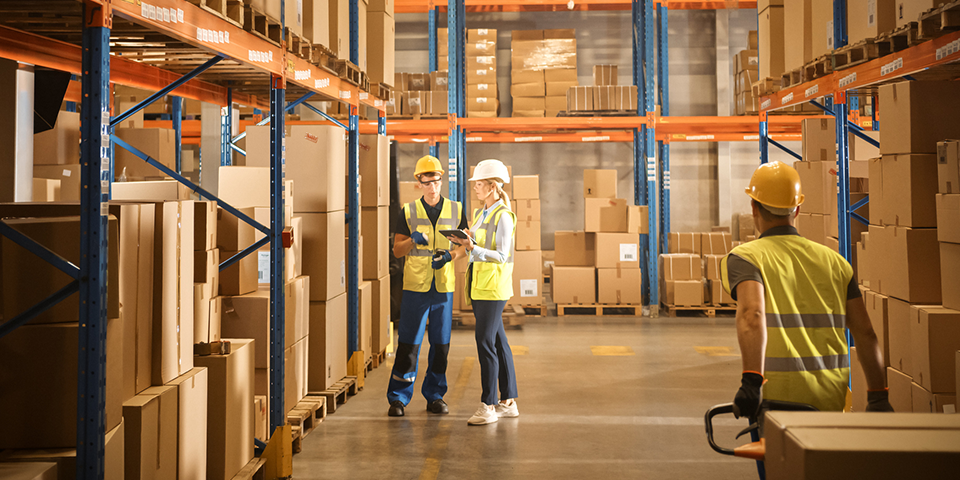
The choice you make between outdoor and indoor warehouse operations depends on a variety of factors and has different advantages based on your needs. This guide summarizes the pros and cons of indoor and outdoor warehouses, the best equipment to use and which storage systems to choose.
The Different Types of Warehouses
There are many different types of warehouses, all of which can be categorized into indoor or outdoor facilities. Here’s a quick breakdown of the differences between each:
What Is an Indoor Warehouse?
Indoor warehouses are enclosed structures that offer protection from the elements and enhanced security. They’re ideal for storing goods that require controlled environments or are susceptible to damage from weather conditions. Examples of indoor warehouses include:
- Distribution centers: Distribution centers handle large shipments and are typically located near transportation hubs to facilitate quicker distribution timelines. Major retail brands maintain their own distribution centers to manage large-scale operations and facilitate fast processing to meet customer demand.
- Cold storage warehouses: Pharmaceutical companies and food businesses use these warehouses to store food, drinks and medications. They ensure the quality of these products meets necessary regulations. It can prove costly to maintain a cold storage warehouse and requires workers to undergo training on handling goods like medicines.
- Private warehouses: Usually built as indoor operations, companies such as larger retail groups, distribution companies and manufacturers own private warehouses. These companies either own or rent the space for their operations.
- Public warehouses: Typically occupied by more than one business, third-party logistics providers manage public warehouses. They’re a flexible alternative to private warehouses. Space is normally rented out to business owners by the square foot.
What Is an Outdoor Warehouse?
An outdoor warehouse is an open-air storage facility suitable for large, durable materials that can withstand weather exposure. They offer flexibility and cost-effectiveness for storing items that don’t require climate control. These spaces can be used for many kinds of storage and processing, such as:
- Construction material storage: Outdoor warehouses are often used to store construction materials like lumber, steel beams, concrete blocks and pipes. These materials are generally durable and can withstand exposure to the elements.
- Equipment storage: Businesses often use outdoor warehouses to store large equipment such as agricultural machinery, industrial machinery and landscaping equipment.
- Container yards: Shipping containers are often stored in large outdoor yards, especially near ports and transportation hubs. These yards are temporary storage facilities for goods in transit.
Differences Between Indoor and Outdoor Storage
Both indoor and outdoor warehouses have their own advantages and disadvantages to consider.
Pros of Outdoor Warehouses
An outdoor warehouse is particularly beneficial for larger materials that can withstand weather exposure. Other advantages include:
- Flexibility: There’s no limitation on the size of shipments and items to be stored. For example, you can store large machinery outside if indoor space is unavailable.
- Minimal building costs: Especially beneficial for businesses with cost constraints, outdoor warehouses offer larger spaces at little cost compared to indoor warehouses.
- Great for durable shipments: Many construction materials can withstand weather. These loads are often too large for indoor storage, so their durability makes them ideal for outdoor storage.
Cons of Outdoor Warehouses
Despite the benefits, outdoor warehouses may not be suitable for some businesses.
- Weather restrictions: Harsh sunlight, heavy rain and snowfall limit what can be stored outside. Heavy-duty tarp covers and other protective measures can help, but they may not provide the required protection.
- Extra compliance: Certain outdoor warehouses must have stormwater discharge measures in place.
- Security measures: Theft and vandalism are key concerns when operating an outdoor warehouse. Despite surveillance and stronger fencing, these threats still pose a risk to your business.
- Employee safety: The safety of your warehouse workers is paramount, especially during extreme weather conditions. Be mindful of the safety measures that come with outdoor warehouses.
Pros of Indoor Warehouses
Indoor warehouse spaces offer many key benefits:
- Improved security protection: When shipments and other materials and equipment are locked indoors, you have better security protection against theft.
- Shelter against weather elements: If your business can store all shipments indoors, it provides a safe area for equipment and materials, protecting them from poor weather conditions.
- Worker comfort: Warehouse workers have access to better safety measures to protect them from extreme weather hazards when working outside.
Cons of Indoor Warehouses
However, indoor warehouses have some considerations:
- Limited space and layouts: Although you may have better security and protection, indoor warehouses can prove challenging with large shipments. Your business could lose money if your warehouse lacks capacity.
- Increased running costs: Indoor warehouse spaces may also prove costly. Expenses, including insurance, rent and utilities, can add up compared to an outdoor operation.

Best Warehouse Storage Systems: Indoor vs. Outdoor
Your choice of storage system will depend on the costs to your business and operational needs. All storage systems have unique characteristics that allow them to be more adaptable to either indoor or outdoor conditions.
Outdoor Warehouse Storage
Below is a breakdown of the best outdoor warehouse storage systems for your business:
- Industrial shelving: There are many solutions for industrial shelving for outdoor operations. Corrosion and weather-resistant materials such as aluminum and hot-dip galvanized steel are good options for outdoor industrial shelving.
- Pallet racking: This type of racking is highly durable and versatile, making it suitable for an outdoor environment. For extra protection, use a weather-resistant coating to maintain the durability.
- Conveyor systems: When treated with a weather-resistant coating, conveyor systems are suitable for both outdoor and indoor use. In particular, extendable conveyors handle goods of all sizes for processing and facilitate and unloading of trucks.
Indoor Warehouse Storage
If you decide to operate an indoor warehouse, here are the reliable storage systems to consider:
- Warehouse mezzanines: Installing mezzanines creates additional space. Mezzanines can be customized to suit your needs and adjusted to move to different areas.
- Industrial shelving: From compression clip shelving to metal storage racks and wire shelving, these solutions help store and organize smaller goods.
- Pallet racking: Indoor warehouses commonly use pallet racking to store goods. Pallet racking allows for efficient warehouse operations, as it helps to organize goods, and workers can promptly find products.
What Is the Best Equipment for Indoor vs. Outdoor Warehouses?
Choosing the right equipment for your warehouse helps build a steady warehouse operation, whether you’re managing goods inside or outside.
Best Equipment for Outdoor Warehouses
To maintain safety and achieve maximum performance, here are the equipment types you should use for your outdoor warehouse:
- Utility vehicles and tow tractors: This equipment moves goods between locations, helping your team get products where they need to be.
- Internal combustion forklifts: Diesel or gas combustion forklifts can handle uneven ground surfaces, as many of them come with pneumatic tires and good traction. These forklifts should be used in open, well-ventilated spaces — perfect for outside warehouses.
- High-capacity forklifts and container handlers: These forklifts are specially designed to handle oversized and heavy goods. They can be equipped with attachments such as fork extensions for lifting bulky materials.
Best Equipment for Indoor Warehouses
For an efficient indoor warehouse business, consider the following indoor equipment:
- Order pickers: Ideal for picking tasks in indoor warehouses, order pickers are easy to control and deliver reliable performance. Their user-friendly design helps workers fill orders accurately.
- Electric forklifts: The energy efficiency and typically quiet operation of electric forklifts make them a popular choice for indoor warehouses. Both three- and four-wheel forklift models work well on even flooring.
- Narrow-aisle forklifts: These forklifts help you complete warehouse tasks in limited spaces. They feature a compact design that allows for easy adjustment in narrow spaces and high-density warehouses.
Buy Top-Rated Warehouse Solutions at Burns Industrial Equipment
Looking for ways to enhance your existing operations or start a brand-new company from the ground up? Burns Industrial Equipment has all the warehouse products and services you need. Our team delivers a variety of equipment and storage solutions, including new, used and rental equipment, to help your warehouse business thrive.
Contact our team today to chat through your warehouse storage needs. You can also stop by one of our locations to speak with us in person.